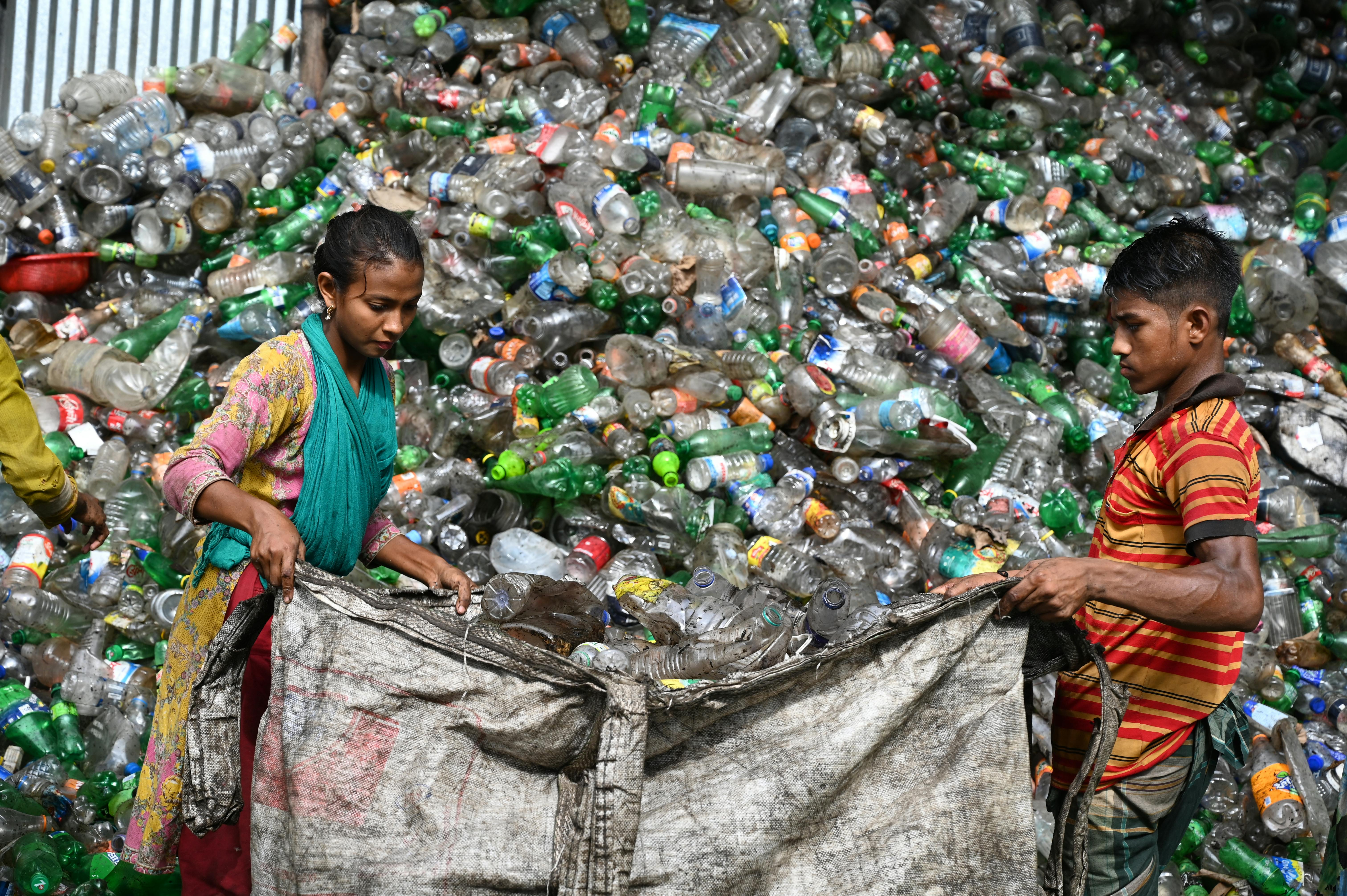
Our Planet. Our Earth. Our Responsibility. The motto that we all need to live by. Over the past few years, climate change has stopped being a distant concept, it is something we have been living and experiencing in our daily lives. If you ever noticed over the past few years India and many other countries have seen a tremendous change in the climate. Be it unpredictable monsoons, excessive heatwaves and occurrence of many environmental disasters, these all are just a sign of the declining health of our climate.
Urban areas are turning into concrete spaces with high rise buildings, monuments and places of entertainment that just benefit the people making money and not the general public. There no longer is room for trees as forests shrink, wild animals are forced to enter into human spaces leading to human-wildlife conflict. The role that we once played in protecting our environment no longer exists when money, power and play are at the forefront of everything.
These changes are only going to let the planet shrink and cause greater harm and much more disasters for human life as well as the economy. The balance is shifting but at what cost? Its time educational institutes play a crucial role in reversing the trend. This Earth Day lets pledge to raise awareness and inspire one another to come together for a cause which is protecting our environment. As forests shrink, animals are forced into human spaces, leading to rising human-wildlife conflict. The balance is shifting and educational institutions now have a crucial role to play in reversing this trend. This Earth Day lets pledge to raise awareness, activism, and education and inspire one another to come together for a bigger cause that is to save our planet.
What is Earth Day?
Earth Day is celebrated annually on April 22nd. Started in the 1970s in the United States as a global movement to raise awareness about environmental issues such as pollution, deforestation and climate change. Over the years, it has now grown into a worldwide call to action to encourage action in safeguarding the planet. The 2026 theme for Earth Day is “Our Power, Our Planet,”a rallying cry for people everywhere to reclaim their voice, their rights, and their future. In 2020, EDO launched the Climate Literacy campaign, urging governments attending the crucial United Nations climate summit in 2021 to make climate literacy a core feature of school curriculum across the globe. Over 400 organizations from 100 countries, representing more than 300 million people, have signed on ahead of COP26 to support stronger climate action.
Climate action can feel overwhelming but often, what holds students back are common misconceptions. Let’s clear them up with facts:
Myth: Going green in schools is expensive and complicated.
Fact: Simple changes like reducing electricity and paper use can cut costs significantly. Schools worldwide have reported lower bills just by switching to energy-efficient habits.
Myth: Individual actions don’t make a difference.
Fact: If even a fraction of the world’s 1.5 billion students make small changes, the impact is massive. For example, global youth-led movements have already influenced climate policies and awareness at scale.
Myth: Sustainability is only about planting trees.
Fact: While tree plantation helps, major global issues like plastic pollution (over 400 million tonnes produced every year) and energy consumption require everyday actions like reducing waste, saving electricity, and changing habits.
Take the Challenge: “7-Day Green Habit Tracker”
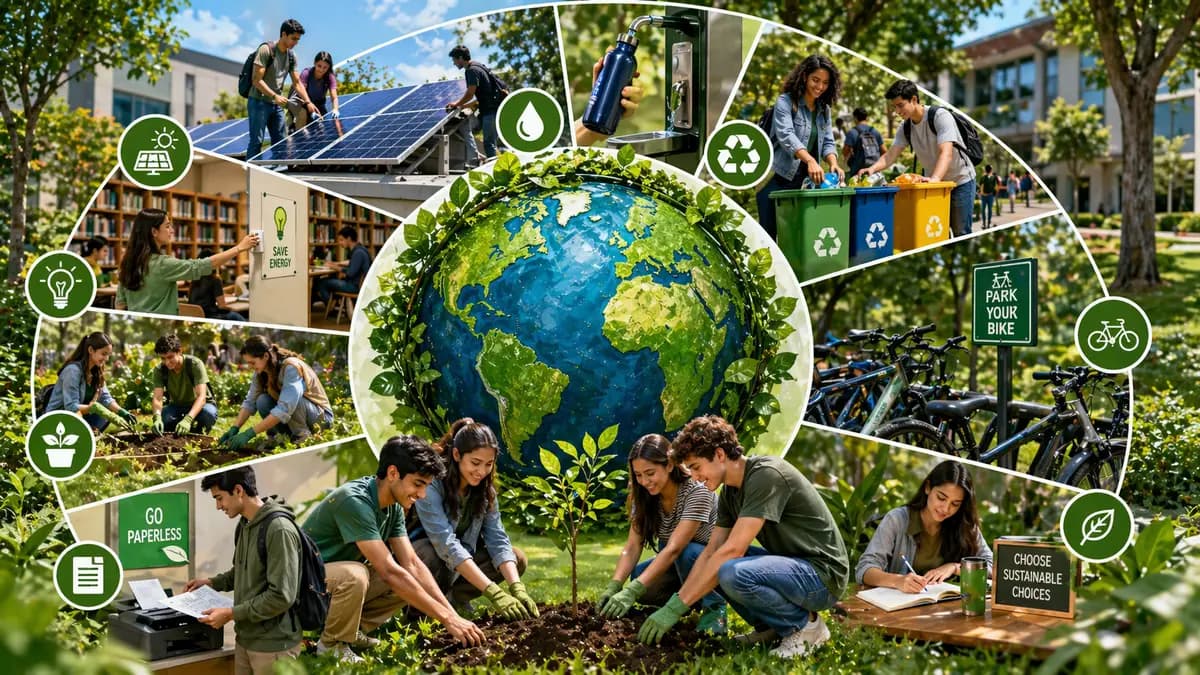
Instead of reading or watching others make a difference, it's high time that we take up a challenge to save our planet, while saving ourselves. To make sustainability fun and actionable, schools and colleges can introduce a “7-Day Green Habit Tracker”challenge. For example on day 1: students can plant trees indoors or outdoors. Day 2, save electricity at homes by switching off unused lights and devices, and so on until day 7 and beyond. This encourages students to adopt small, manageable habits that collectively create a big impact. Schools can also make sure this falls under the environment category in school as an assessment with daily updates on social media or a final project. This not only spreads awareness but also builds a sense of community and accountability. Below are other ways through which students can take up ideas and complete the 7 day challenge.
10 Ways Schools and Colleges Can Actually Go Green
1. Go Paperless
One of the simplest forms to reduce environmental impact is to reduce the use of paper. In the world roughly around 2.47 million to over 10 million trees are cut down daily worldwide for paper production. Annually, this totals roughly 4 to 8 billion trees, with paper production accounting for a significant share of global deforestation. Schools can switch to digital assignments, e-notices and online submissions. Even partial reduction can save thousands of sheets of paper annually, reducing deforestation and waste. However, sustainability doesn’t stop at going digital—regularly clearing unnecessary emails and stored data can also help reduce energy consumption.
2. Set Up Proper Waste Segregation
Installing separate bins for dry, wet, and recyclable waste is essential but awareness is equally important. According to the United Nations Environment Programme, a large portion of global waste could be recycled if properly segregated at source. In India alone, improper waste segregation leads to most waste ending up in landfills.
Schools can run awareness drives, put up visual guides near bins, and assign student volunteers to monitor usage. Even simple steps like labeling bins clearly can drastically improve recycling efficiency.
3. Start Composting on Campus
Food waste is a major contributor to methane emissions, a greenhouse gas far more potent than carbon dioxide. The Food and Agriculture Organization estimates that nearly one-third of all food produced globally is wasted.
By setting up composting units, schools can convert cafeteria waste into nutrient-rich compost for gardens. For example, a medium-sized school can divert hundreds of kilograms of waste annually from landfills through composting.
4. Create and Maintain Green Spaces
Urban green spaces play a crucial role in improving air quality and reducing heat. According to the World Health Organization, green spaces can significantly improve physical and mental well-being.
Schools can go beyond planting trees by maintaining gardens, creating biodiversity zones, or even rooftop gardens. Students can participate in regular upkeep, making it both an environmental and educational activity.
5. Ban Single-Use Plastics
Globally, over 400 million tonnes of plastic are produced each year, much of which ends up in oceans and landfills. Single-use plastics are among the biggest contributors.
Campuses can replace plastic bottles with refill stations, switch to steel or biodegradable cutlery, and encourage students to carry reusable items. Even banning plastic during events can significantly cut down waste generation.
6. Adopt Energy-Efficient Practices
Energy consumption in buildings accounts for a large share of global emissions. The International Energy Agencyhighlights that energy efficiency is one of the fastest ways to reduce carbon footprints.
Switching to LED lighting alone can reduce energy use by up to 75%. Installing motion sensors, using natural light, and conducting “switch-off” campaigns can further cut electricity consumption.
7. Promote Sustainable Transport
Transport is a major source of air pollution, especially in urban areas. Encouraging alternatives like walking, cycling, carpooling, or public transport can make a noticeable difference.
Schools can introduce “no vehicle days,” provide cycle stands, or incentivize carpooling. Even a small shift in commuting habits can reduce emissions significantly over time.
8. Establish Eco-Clubs
Student-led initiatives are powerful drivers of change. Eco-clubs provide a platform for students to take ownership of sustainability efforts.
From organizing clean-up drives to running awareness campaigns, these clubs can create lasting impact. They also help students develop leadership skills while contributing to real-world environmental solutions.
9. Conduct Environmental Workshops and Activities
Awareness is the first step toward action. Without understanding the “why,” change is hard to sustain.
Schools can host workshops, invite experts, or conduct interactive activities like sustainability audits or quizzes. Collaborations with environmental organizations can further enrich learning and exposure.
10. Track and Reduce Carbon Footprint
You can’t reduce what you don’t measure. Tracking energy, water, and waste usage helps institutions understand their environmental impact.
By setting measurable goals like reducing electricity use by 10%, schools can create accountability. Regular monitoring and student involvement in audits can turn this into a continuous improvement process.
Final Word:
Sustainability is not about making one big change—it’s about making many small, consistent choices that collectively create a lasting impact. Schools and colleges have the power to lead this transformation by integrating eco-friendly practices into everyday campus life.
This Earth Day, instead of limiting efforts to symbolic gestures, institutions can focus on practical actions that drive real change. Whether it’s reducing waste, conserving energy, or inspiring others through challenges like the 7-Day Green Habit Tracker, every step matters.
The environmental challenges we face today may be complex, but the solutions often begin with simple actions. And when these actions are adopted by young minds in educational spaces, they have the potential to shape a more sustainable future for everyone.