
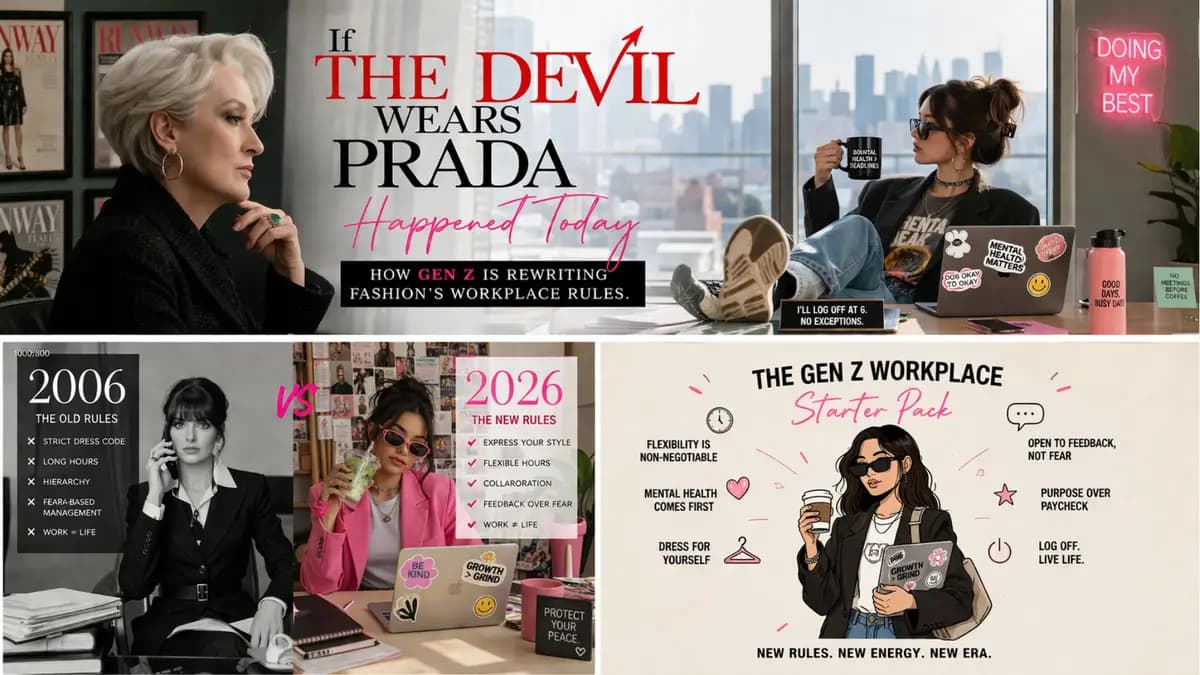
“Florals? For spring? Groundbreaking...” This iconic dialogue by Miranda Priestly in The Devil Wears Prada still rules places, 20 years later. Now that we are ready for The Devil Wears Prada 2, it is only fair to see how the work culture has changed from 2006 to 2026.
In stark contrast to strict cabin jobs, where every breath is laced with tension, Gen Z workplace trends are defined by a sense of freedom and control over one's own life. Anne Hathaway as Andrea Sachs & Emily Blunt as Emily Charlton would have gone into hysterics after looking at the present work culture.
Fashion Industry Jobs have changed a lot over time. From changing designations to changing work-life balance, Gen Z has turned the game around. The fashion workplace culture has evolved nicely over the past few years.
The real shock for Miranda wouldn’t be Florals, it would be someone texting her a “just looping you in.. I’ll log off at 6”.
From Power Suits To Power Boundaries
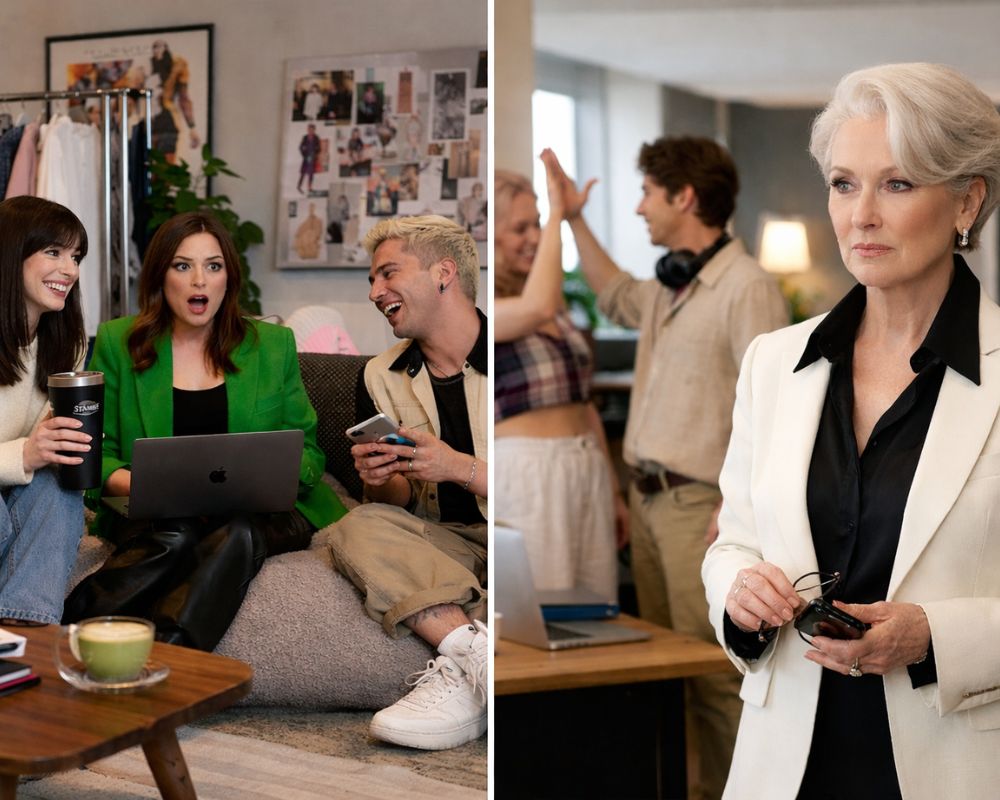
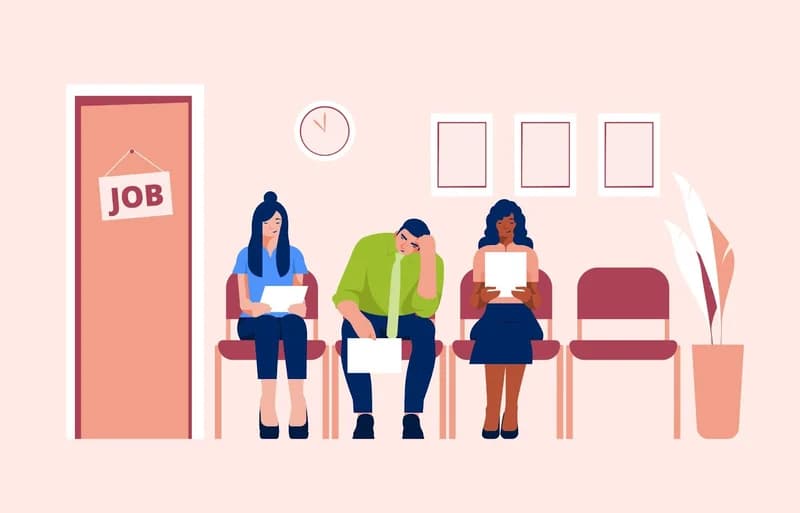
Image Credits: AI Generated
With the rise in Instagram and Pinterest, Gen Z workplace trends are also rising. The fashion workplace culture has seen a change not only with outfits but also with outlooks. The modern office dress code is not just Pinteresty outfits; it’s the boundaries the employee carries with that outfit. Work-life balance, Gen Z’s only priority, they have clearly set a boundary to make sure the work doesn’t define their life.
The Gen Z fashion industry is no longer inclined to wear pencil skirts, shirts and formals. They come to the office in whatever feels comfortable. Convenient fashion is re-imaged and curated to accommodate their needs, working for a limited time in a day, instead of being readily available after hours.
Miranda Priestly’s “That’s all” would be replied to through a Slack status: “OOO. Touch grass [maybe adding a chai break too].” They are emotionally active and deny burning out in the name of ambition. They build success on their terms.
Dress Codes Are Dead: Long Live Personal Style
“But what you don't know is that that sweater is not just blue. It's not turquoise. It's not lapis. It's actually cerulean.”
If Miranda were to say this to an employee in 2026, it would end up being a reason for quitting. For Miranda, fashion was hierarchy. She knew every colour like the back of her hand. The history of cerulean blue was in the category, too. But for Gen Z, fashion is identity. If we are talking about how Gen Z is changing workplace fashion, the main reason for that is the perspective on why it matters.
Nowadays, Gen Z ditch the conventional power dressing and switches to bold statement pieces, oversized outfits and sneakers in the boardroom. The fashion workplace culture is now about creating one’s identity and doing it out loud so the world remembers. The Gen Z fashion industry is adapting to the newest Instagram trends and aligning them with the modern office dress code.
Their work culture is straight out of Pinterest, they would go to a client meeting holding a Stanley sipper and wearing baggy jeans. The workplace fashion in 2026 has especially seen a rise in co-ord sets, plaid shirts, Korean pants and minimal jewellery with multipurpose bags. The office outfit trends on Instagram have changed the age-old notion that only people in suits can be taken seriously.
The Rise Of “Corporate Girlie” [& Everyone Else]
Manicured nails, Matcha in hand and a Pinterest-worthy outfit on a girl is exactly what a corporate girlie would be described as. The reason behind office outfit trends is the mindset of being watched.
With the rise of social media, consumers' willingness to share every personal and private detail has taken a different turn. The workplace fashion trends 2026 rely on the social media enthusiasts who make it a point to wear something new to the office that can also contribute to more likes and saves for the ‘Gram. The Gen Z office dress code trends will continue to inspire small businesses to evolve and bring new collections focusing on reliability and convenience, along with being updated with fashion.
Hierarchy? Never Heard Of Her.
Another major shift in the Gen Z workplace is the management based on fear. Fashion workplace culture thrives on hierarchy, just like it was shown in The Devil Wears Prada. But gone are the days when people followed rules that didn’t align with their ideologies.
Workplace fashion is inspired by this difference between the millennial and Gen Z work culture. While one chose screaming, the other chose Slack threads, and where one chose fear, the other chose feedback. The fashion industry is more about open communication than the rigid old systems of hierarchy. They want collaboration and transparency in workplaces. Miranda Priestly wouldn’t survive today’s HR complaints.
“Selling Your Soul To The Job” Is Not A Compliment
The Gen Z would send Emily to a therapist because she would work through sickness by reciting “I love my job. I love my job. I love my job” Today’s Gen Z work culture does not enjoy that narrative.
They aim for purpose-driven work, ethical companies and time for life outside of work. They have turned back from the Fashion workplace culture where your outside office life would be the one taking the brunt of the work life. They are also making sure that the work is value-driven, aligning with their beliefs.
Andy would second-guess staying at Runway if there was no stance on sustainability.
Meme-able Workplace Communication
The Gen Z today will revert to Miranda Priestly’s icy cold stares and cutting remarks with a GIF. The fashion workplace culture is made survivable by replying to messages with a meme. The Gen Z would bond with their teammates via voice notes and slightly unhinged Slack messages.
Gen Z is not anti-fashion. It is them being anti-fashion hierarchy. Miranda Priestly at Runway, setting trends, would today be competing with Instagrammers setting trends. And that would definitely be a sequel we would watch.
So.. Would Andy Quit Again?
Fashion Industry Jobs are delicate. The Gen Z work culture is more delicate. The workplace would not care if Andy wore a cerulean blue sweater in the summer. The modern office dress code is all hype if you dress for yourself.
The fashion workplace culture now would have Andy negotiate her boundaries, build a personal brand and even let her outgrow runway on her own terms. Instead of escaping, she might transform it. And that is what real power would look like.
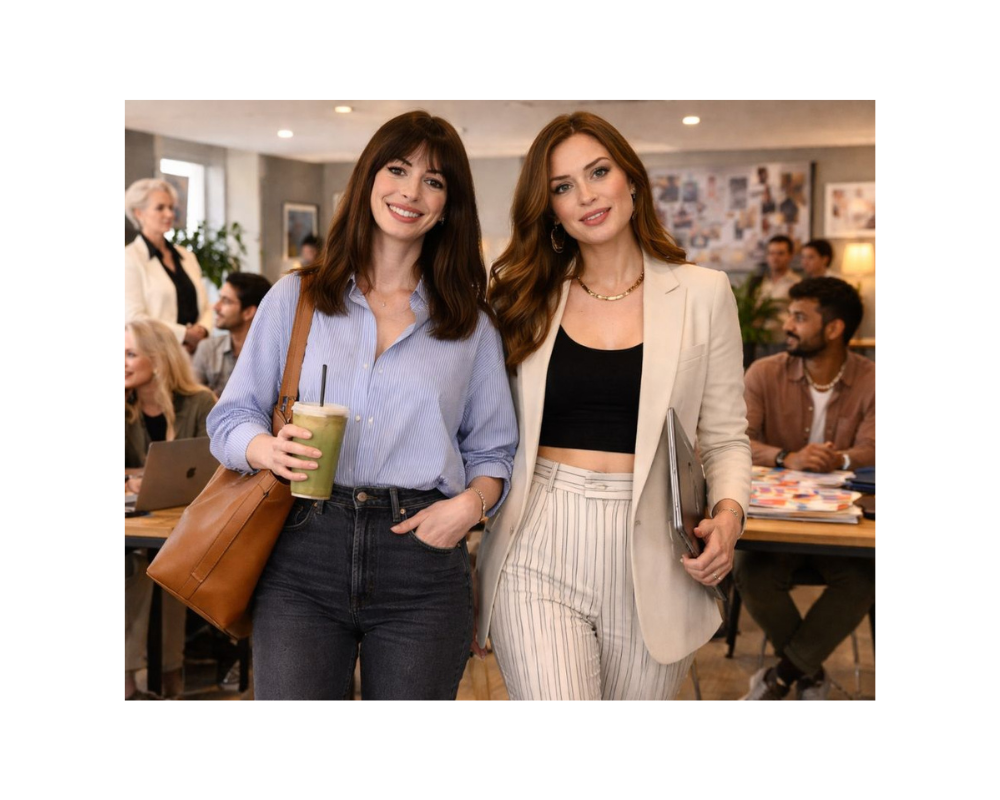
Image Credits: AI Generated
Workplace Is The Real Glow-up
Miranda Prietly will always be iconic, but in 2026, she would need a rebrand. Fashion workplace culture needs a little bit of a makeover now. The industry shows that fashion is power, but it is questionable how to assert that power.
The workplace fashion trends don’t just focus on the corporate girlie. It also has a bit of linen makeovers for men. For years now, men like Siddharth Batra and Ankush Bahuguna have been generalising men doing fashion and adapting to their femininity by using nail paints and makeup. It will be worth watching Season 2, where saying no, showing up for yourself and knowing your worth would be the new anthem.