
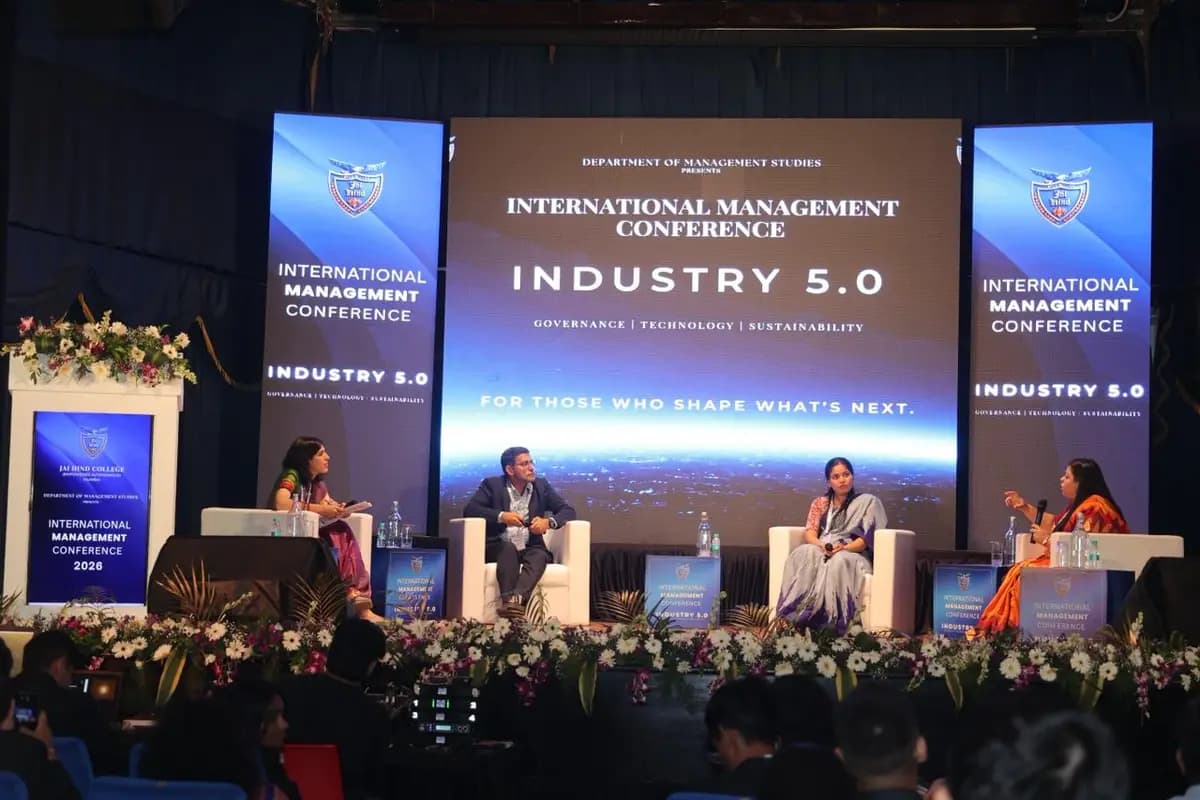
On 24th April 2026, the corridors of Jai Hind College, Churchgate, Mumbai, bore witness to something this institution had never hosted before, yet pulled off with the authority of a seasoned academic powerhouse. The inaugural International Management Conference, organised by the Department of Management Studies under the theme Industry 5.0: Governance, Technology and Sustainability, was not merely an event. It was a statement. A declaration that Jai Hind College, a NAAC A+ Reaccredited institution and one of Mumbai's most storied seats of learning, has firmly planted its flag in the world of global academic research.
Over the course of a single, electric day, the college brought together scholars from IIM Ahmedabad, IIT Kanpur, IIM Visakhapatnam, Trinity Business School (Ireland), the University of Bristol (England), FORE School of Management, SP Jain Institute of Management and Research, and Jaipuria Institute of Management. Eighteen track chairs reviewed and facilitated the presentation of 152 abstracts across tracks spanning multiple dedicated conference spaces across the college. That is not a seminar. That is a research ecosystem in full motion.
A Chief Guest Whose Message Echoed Through Every Corridor
The inaugural session was graced by Dr. Niranjan Hiranandani, Managing Director and Founder of the Hiranandani Group of Companies, one of India's foremost real estate and infrastructure conglomerates. Dr. Hiranandani addressed the gathering with a message that was equal parts personal and profound. He recounted the story of his father, a distinguished ENT surgeon well into his sixties, who upon learning of a new surgical technique pioneered by a former student in Germany, immediately made plans to travel there and learn it firsthand. Dr. Hiranandani turned to his father and said: the student inside you is still alive. The message to every young researcher and student in the room was unmistakable. Always be a learner. It was precisely the spirit the conference was built to inspire.
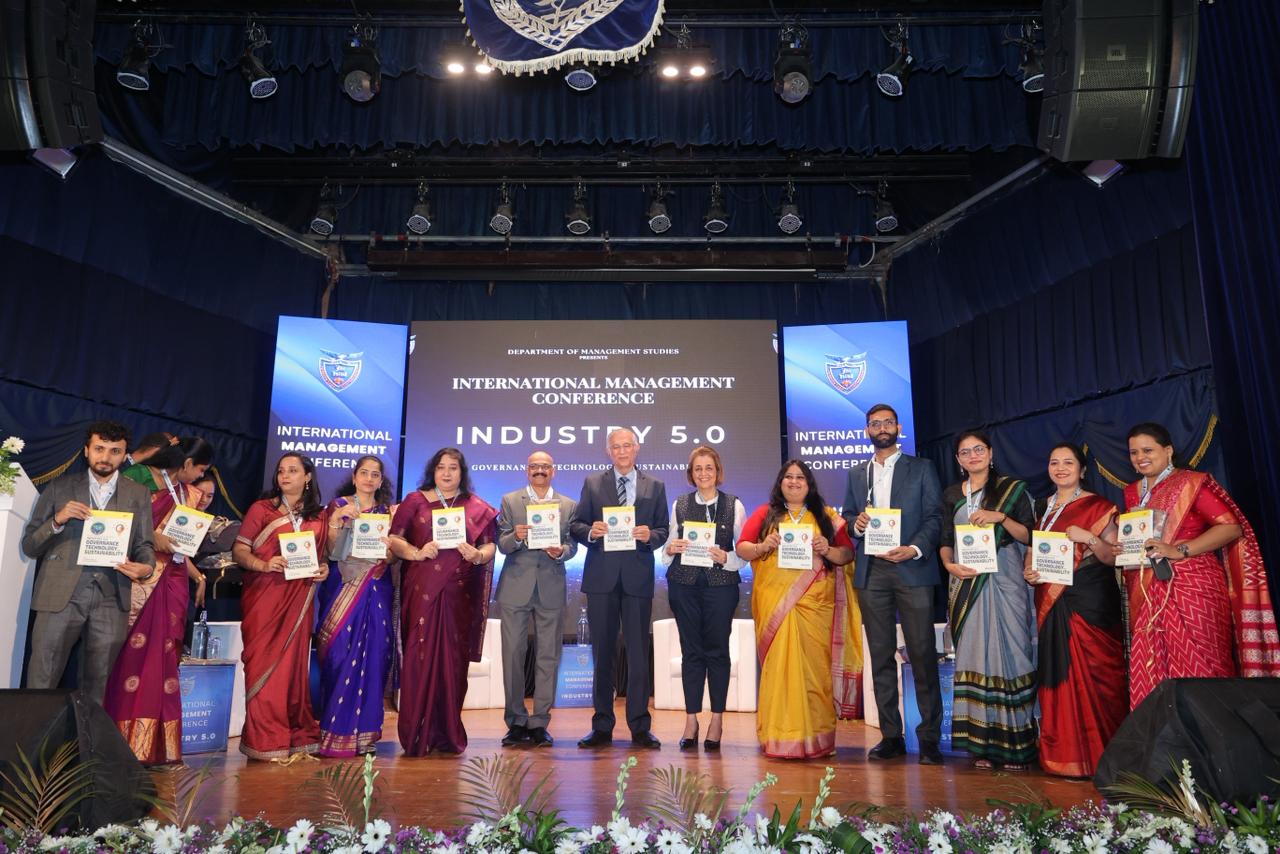
Prof. (Dr.) Vijay Dabholkar, Principal of Jai Hind College, presided as Chairperson. The conference was convened by Dr. Rakhi Sharma, Director of AICTE Programmes, under the Chief Patronage of Dr. Rajesh Thadani, Board President. The Book of Abstracts, co-edited by Dr. Rakhi Sharma and Dr. Arunima Haldar, Associate Professor at SPJIMR and a PhD gold medalist from IIT Bombay, was formally released by the distinguished guests during the inaugural session.
A Panel That Represented India's Research Pinnacle
The panel discussion on Contemporary Management Research was moderated by Dr. Disha Bhanot of SP Jain Institute of Management and Research, Mumbai, and featured panelists of remarkable distinction. Dr. Mehul Raithatha from IIM Ahmedabad, Dr. Mousami Prasad from IIT Kanpur, and Dr. Preeti Virdi from IIM Visakhapatnam collectively brought to the stage the depth of research thinking that defines India's premier institutions. The discussion was not a ceremonial exercise. It was a rigorous intellectual exchange about the future of management research in a world navigating the complexities of Industry 5.0.
The International Editorial Panel: A Window Into Global Publishing
In the afternoon, One of the conference's most anticipated sessions, the International Editorial Panel Discussion, was conducted online with panelists joining from across the globe. Dr. Ashish Kumar Jha and Dr. Baidyanath Biswas, both from Trinity Business School, Ireland, were joined by Dr. Sunil Tiwari of the University of Bristol, England. The three addressed the gathering on cutting-edge research, academic publishing, and what it takes for emerging scholars to make a meaningful contribution to global knowledge. For the students in the room, it was a rare, unfiltered look at the world they aspire to enter.
Adding further weight to the editorial discourse was the Editorial Talk by Dr. Mohammed Aboramadan, Associate Editor of the International Journal of Organizational Analysis, a Scopus Q1 journal, His address offered participants an insider perspective on what distinguishes publishable research and how young scholars can position themselves for impactful academic careers.
Workshops That Built Researchers, Not Just Attendees
The Paper Development Workshop on Systematic Literature Review, held in the auditorium and led by Dr. Shubham Singhania of FORE School of Management, New Delhi, and Dr. Varda Sardana of Jaipuria Institute of Management, Noida, was among the conference's most practically valuable offerings. Dr. Sardana's engagement with the audience was particularly memorable. The Systematic Literature Review Track Presentations, gave students of Jai Hind College and research scholars a dedicated space to present their work in a structured, peer-reviewed environment. For many, it was their first time presenting original research before an expert audience.
Art of Case Writing: Where Business Meets Storytelling
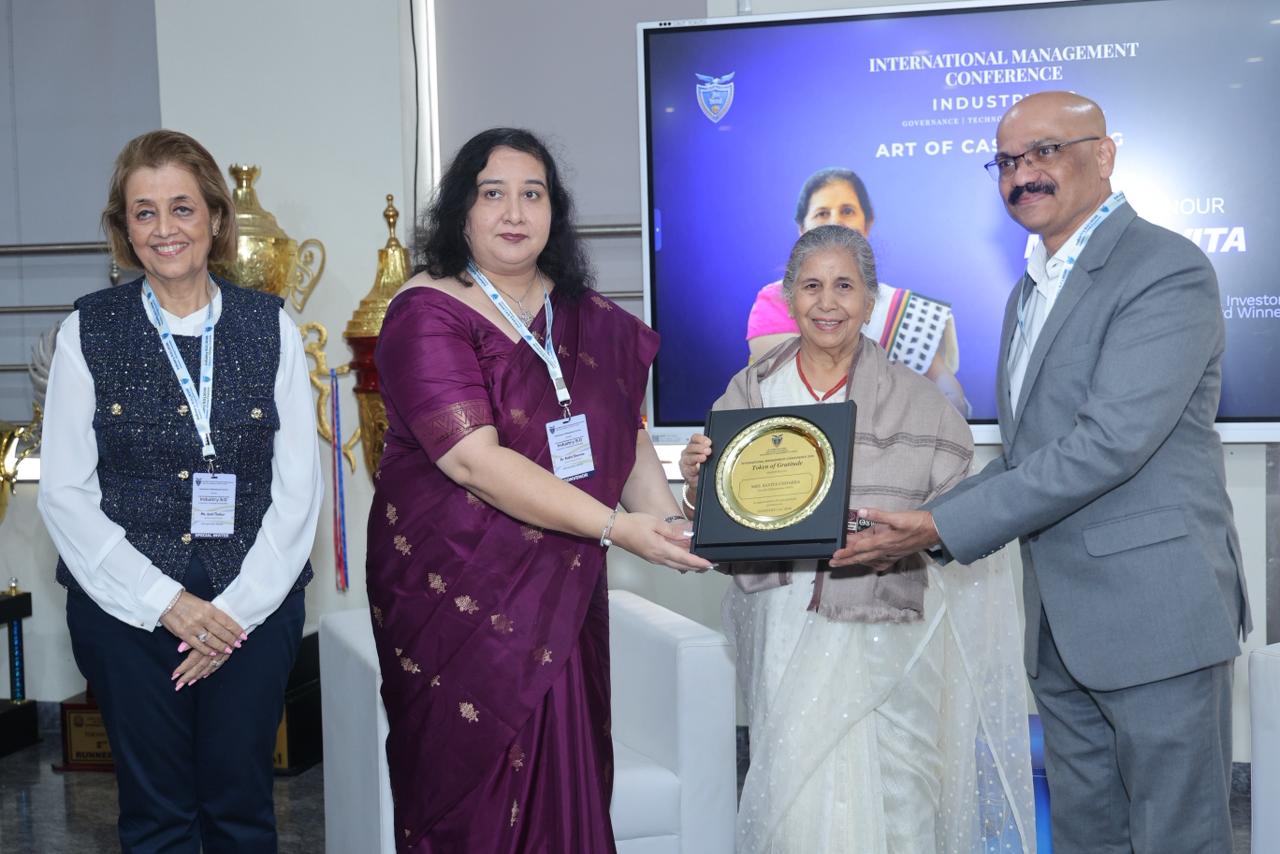
The Art of Case Writing session was led by Dr. Mita Dixit, Director and Family Business Advisor certified by the Family Firm Institute, USA, with Mrs. Savita Chhabra, Founder Chairperson of HRIPL and a Women Super Achiever Award recipient, as Guest of Honour. The session explored the craft of translating real-world business challenges into compelling academic case studies, a skill as critical as any in the management researcher's toolkit.
Across 18 research tracks, 152 abstracts were presented over the course of the afternoon, with presentations running simultaneously across multiple dedicated conference spaces within the college. The research spanned themes including finance and fintech, entrepreneurship, sustainability, leadership, digital transformation, and education. The sheer volume and quality of submissions, reviewed rigorously by 18 track chairs drawn from institutions outside Jai Hind College, reflects the conference's commitment to standards that match its ambitions.
An Evening to Remember
As the sun set over Marine Lines, the Valedictorian Ceremony in the college auditorium brought the academic proceedings to a formal close. The conference then adjourned to The Bombay Presidency Radio Club, one of Mumbai's most distinguished private clubs overlooking the Arabian Sea, for the Gala Dinner. In the warm light of that storied venue, delegates, scholars, students and faculty continued the conversations the day had started, not as strangers, but as members of a community that Jai Hind College had, in the span of a single day, succeeded in creating.
The inaugural International Management Conference 2026 was not just Jai Hind College's first. By every measure, it was a debut worthy of an institution that has been shaping Mumbai's intellectual life since 1948.