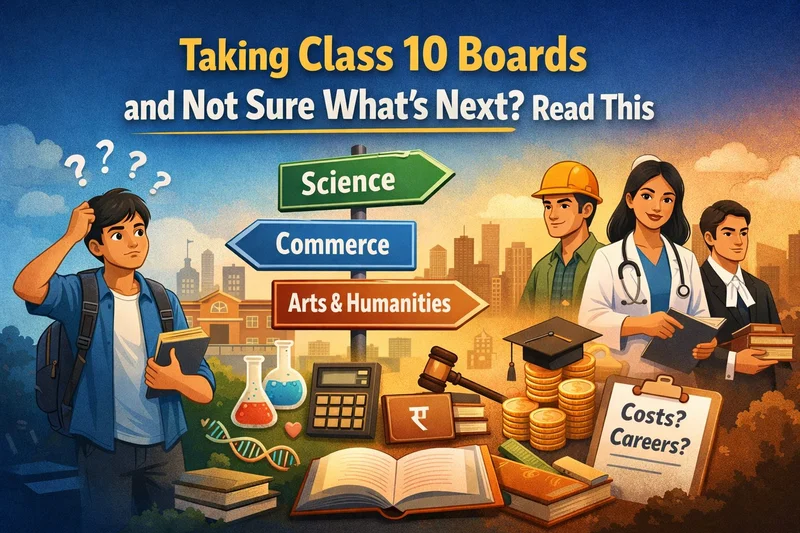

Earlier, parents wanted their kids to become doctors or engineers.
Now, with global tensions rising, half the WhatsApp uncles think every teenager should know how to code, drone tech, and survive a geopolitical crisis.
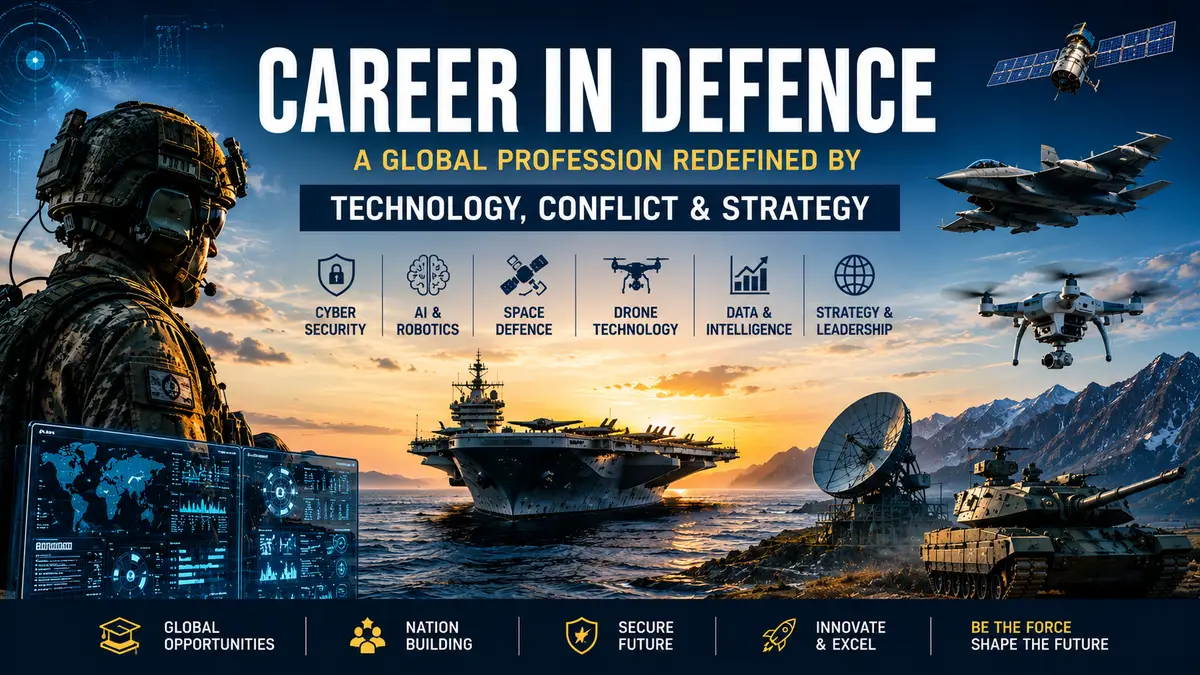
Safe career bets are changing with technological advancements. Parents are no longer looking forward to having a lawyer or teacher in the house. Careers in defence are an emerging area within a vast education syllabus, based on the needs of the hour.
The global defence industry grew from $1.9 trillion in 2014 to nearly $2.9 trillion today and is projected to touch $4.26 trillion by 2035. This surge has directly affected the careers and jobs of the nation involved in the crisis.
Modern warfare careers are shaping the economy of the nation by bringing the youth to be self-sufficient when required. It helps in reducing imports in defence and developing an infrastructure that can handle the digital and modern attacking systems over time. Below are a few insights on how Careers in Defence are evolving.
Defence Is No Longer Just Combat
Gone are the days when wars were fought with bows and arrows or even guns. A soldier in the next decade might first watch things unfold over a screen before entering the battlefield. The global defence industry is rapidly expanding into cyber and space security. Nations are being attacked and brought down by accessing controls over networks and tech infrastructure. This directly impacts the nation’s economy and targets the weak corners of its security.
Even the space domain, where there are satellites, is being targeted. Millions spent on these projects go in vain, and can significantly affect national infrastructure and economic systems. Defence now involves having economic stability. It is not just the responsibility of the army now. Regular people are also equally involved.
How Global Conflicts Are Shaping Careers
Based on the current Russia-Ukraine, Israel-Palestine and Iran-Israel war, major attention has been drawn from all over the world, with every economy coming under the radar. Even if one country is affected, the impact often spreads to economies connected through trade, technology and defence partnerships. Every nation wishes to strengthen its youth to be prepared in such times.
Governments are relying more and more on data analytics and AI-generated quick solutions, creating a major demand for careers in defence. Defence technology jobs are considered more secure. The jobs in the private sector in manufacturing, aviation, or logistics are now considered non-stable.
The future of defence careers sounds really promising at the moment. In some war-hit areas, the youth are forced to work for survival. Menial jobs take away their passion and the degree that they worked so hard for. Intelligence Analysts' jobs and other careers in defence would help bridge this gap.
Rise of Private & Hybrid Defence Careers
Private defence tech hiring has created 7000 new jobs this year, which is double compared to the last three years. They are recording 16-18% revenue growth every year. There is a high demand for skilled personnel specialising in Artificial Intelligence [AI], systems engineering, cyber security, and digital manufacturing. Remote and hybrid roles for software engineers have increased incredibly, with 2 software engineers being hired for every hardware engineer by top defence employers.
Space Defence requires AI specialists on a large scale. India aims to do that on its own. But with the shortage of individuals in this section, the employers are liable to pay higher salaries. By 2029, India aims to bring in 52 military satellites in space. But even with those, it will stand far behind Russia, China and the US, leading with more than 150-250 military satellites.
This data alone shows that under the ‘Atmanirbhar Bharat’ ideation, the current government needs more support from the youth and the educated to try careers in these fields. The Global Defence Industry can help India, but if it is made by India and for India, it will make a huge difference in where India stands globally.
Top Defence Careers For Future
Below are a few career opportunities that are being shaped for in the future, expected to remain in demand in the coming years:
Cybersecurity professionals
AI and machine learning experts
Intelligence analysts
Aerospace engineers
Drone system operators
Defence logistics specialists
Data analysts and surveillance experts
Women In Modern Defence Roles
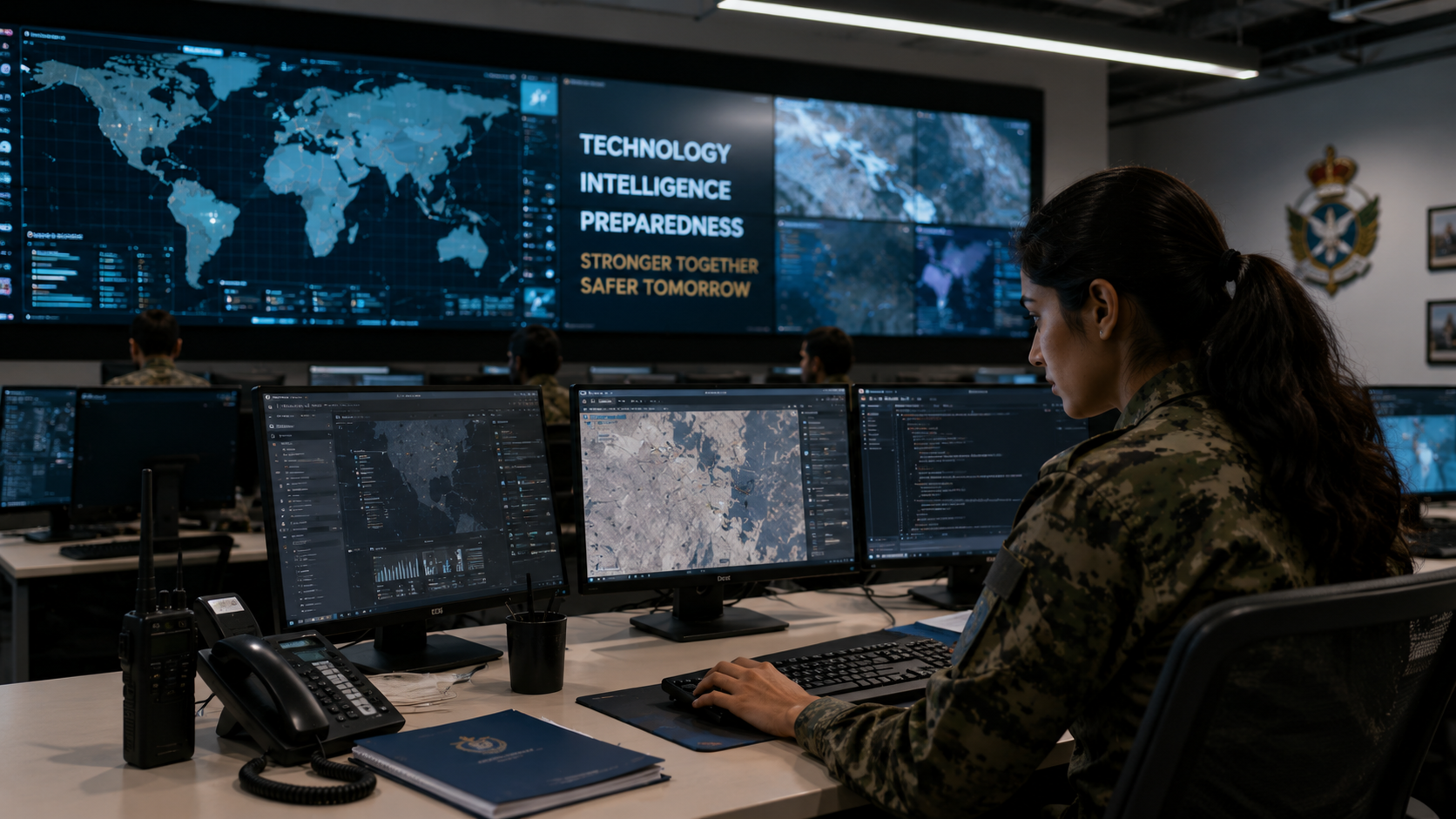
From running a house to hospitals, business, autorickshaws, metros and aeroplanes, Indian women have done it all in the last couple of years. In retaliation for the Pahalgam Attack, it was Indian women - Colonel Sofiya Qureshi of the Indian Army and Wing Commander Vyomika Singh of the Indian Air Force who became key faces of India’s response.
Modern Warfare Careers have seen a considerable rise in women participants. Defence is no longer a battle of physical strength; intelligence and precision are also equally required, and that is a key advantage.
Women are now choosing careers in:
-National security
-Defence research
-Cybersecurity
-Robotics
-Aviation
-Intelligence analysis
-Aerospace technology
Best Institutions for Defence Careers
With that said, lastly, we should have a look at the top 3 domestic and international universities that are best for defence careers:
International:
Massachusetts Institute of Technology - Best for: Aerospace, AI, robotics, military tech innovation, cybersecurity.
Carnegie Mellon University - Best for: Cybersecurity, AI, machine learning, and intelligence systems.
Cranfield University - Best for: Aerospace, defence engineering, drone systems, military technology research.
Domestic:
Indian Institute of Science - Best for: AI, aerospace, robotics, cybersecurity research, and defence technology collaborations.
Indian Institute of Technology Bombay - Best for: AI/ML, drone tech, data science, aerospace engineering, cybersecurity.
Defence Institute of Advanced Technology - Best for: Direct defence-focused education in missiles, autonomous systems, cyber warfare, and defence engineering.
The Final Word
Careers in Cybersecurity and defence are just at an adaptive start. AI in the defence sector will now detect threats and give solutions before humans do. The battlefield of the future may not always be visible - but the careers shaping it already are. Defence is not just fighting with guns and swords now. It involves technology, economy, intelligence, innovation and global strategy.
Rising political warfare has established a major change in not just a nation’s economy but also in a child working on any career. It demands discipline, responsibility and adaptation.