


The 2026 edition of the Met Gala, held on May 4 at the Metropolitan Museum of Art, wasn’t just another glamorous night of couture—it became a powerful moment for Indian fashion on the global stage. While the Met Gala has always been known for its spectacle and creativity, this year saw Indian celebrities and designers take centre stage, transforming the red carpet into a showcase of the country’s rich artistic legacy.
With the theme “Costume Art” and dress code “Fashion Is Art,” the event blurred the lines between clothing and fine art. The museum's Costume Institute exhibition displayed approximately 400 items which demonstrated how fashion has evolved to show how fashion has evolved alongside the human body over 5,000 years. But beyond the exhibition halls, it was on the red carpet where this idea truly came alive—and Indian stars played a defining role in that narrative.
Over the years, themes like Heavenly Bodies, Gilded Glamour, and Superfine: Tailoring Black Style have encouraged bold storytelling. However, in 2026, Indian attendees didn’t just interpret the theme—they reframed it through culture, craftsmanship, and heritage. Their looks went beyond aesthetics, acting as tributes to India’s artistic traditions, from intricate embroidery and handwoven textiles to historical references and regional art forms.
This year’s theme pushed designers and celebrities to treat garments as canvases—and Indian stars embraced this idea with remarkable depth. Whether it was hand-painted textiles inspired by classical Indian art, sculptural sarees reimagined in futuristic forms, or heritage ensembles rooted in royal history, each look carried a narrative.
More importantly, these appearances weren’t just about fashion—they became a platform to spotlight Indian artisans, centuries-old techniques like zardozi and hand embroidery, and the country’s diverse cultural identity on one of the world’s biggest stages.
The result? A red carpet where India didn’t just participate—it led the conversation on how fashion can truly become art. Let's take a look at them.
Top Best Dressed Indian Stars:
Isha Ambani
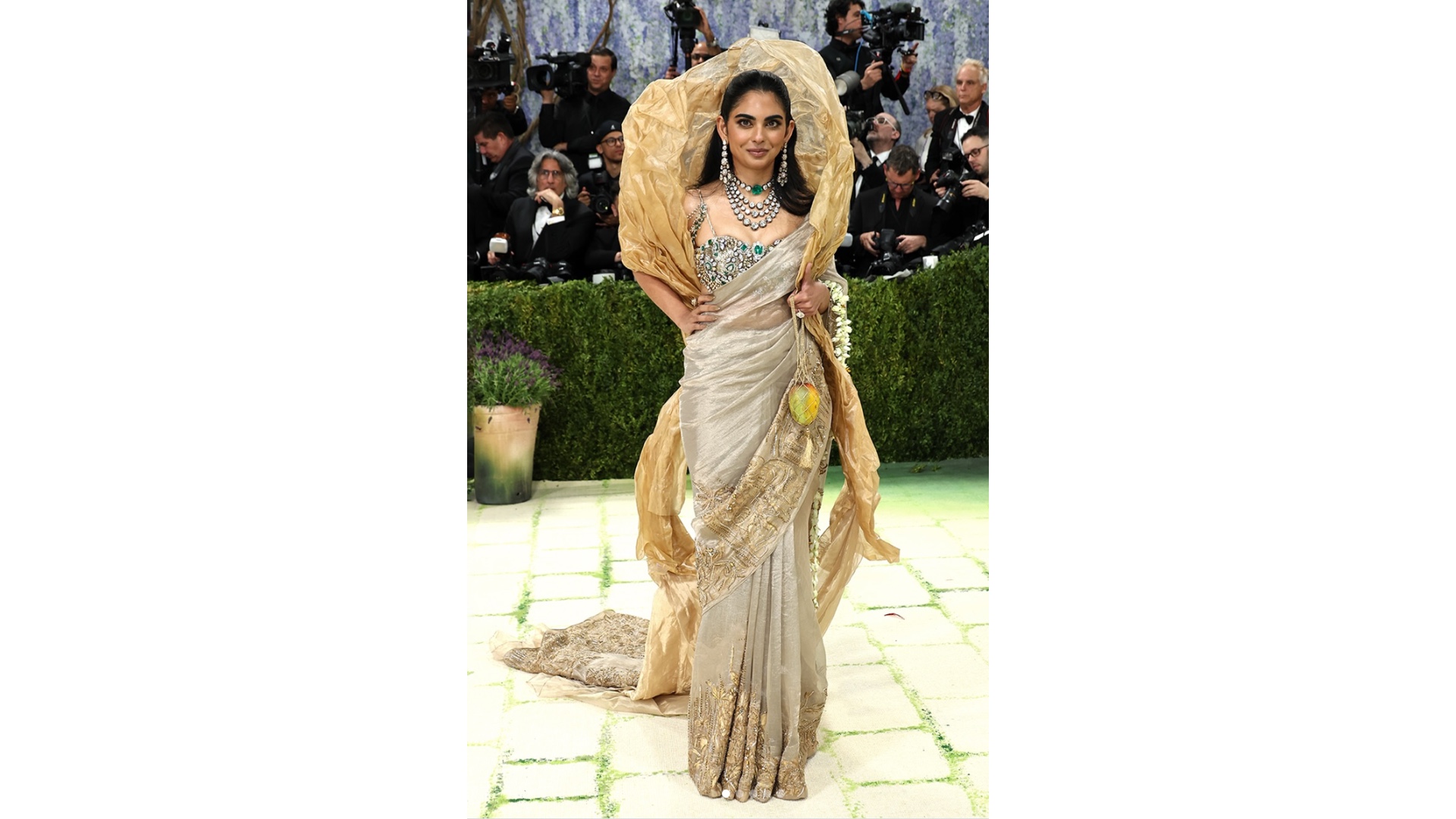
Isha Ambani was one of the best dressed in designer Gaurav Gupta's Living Canvas saree collection. She wore a sculptural saree gown and graced the Met Gala with elegance and fine detailing on her outfit. From wearing her mother's jewelry to representing India she delivered one of the most compelling interpretations of the night. Her look reimagined the traditional saree into a three-dimensional couture sculpture. The base was a fluid, body-skimming drape in a soft metallic-toned fabric that subtly reflected light.
The gold-tissue saree, featuring Pichwai motifs, was crafted over 1,200 hours by 50+ artisans. The look featured over 1,800 carats of diamonds, emeralds, and kundan from Nita Ambani's collection, including a historic Nizam-era sarpech. Styled by Anaita Shroff Adajania, with a 150-hour handcrafted mogra gajra (hair accessory) made from paper, copper, and brass by artist Sourabh Gupta.
The highlight was the dramatic sculpted pallu, crafted in a molten gold-like material that curved and extended around her torso and shoulders. It appeared almost suspended mid-air, like a frozen wave of metal. This sculptural element symbolised movement, time, and transformation, aligning with contemporary art philosophies.
Closer inspection revealed micro hand-embellishments and painted textures, giving the illusion of brushstrokes across fabric—turning the garment into a literal canvas. She wore a gajra as a symbol of Indian culture..
She wore diamond studs and a sleek bracelet, with her hair styled in a clean, pulled-back silhouette, neutral-toned makeup with a subtle glow. Isha Ambani carried a 20-year-old sculptured mango by artist Subodh Gupta as a clutch at the 2026 Met Gala blended high fashion with contemporary Indian art. The metallic, golden mango, paired with a custom Gaurav Gupta saree, symbolized Indian heritage and elevated a mundane, culturally significant item into a global red-carpet statement.
The look struck a rare balance deeply rooted in Indian drapery yet globally avant-garde, making it one of the most talked-about interpretations of the theme.
Karan Johar
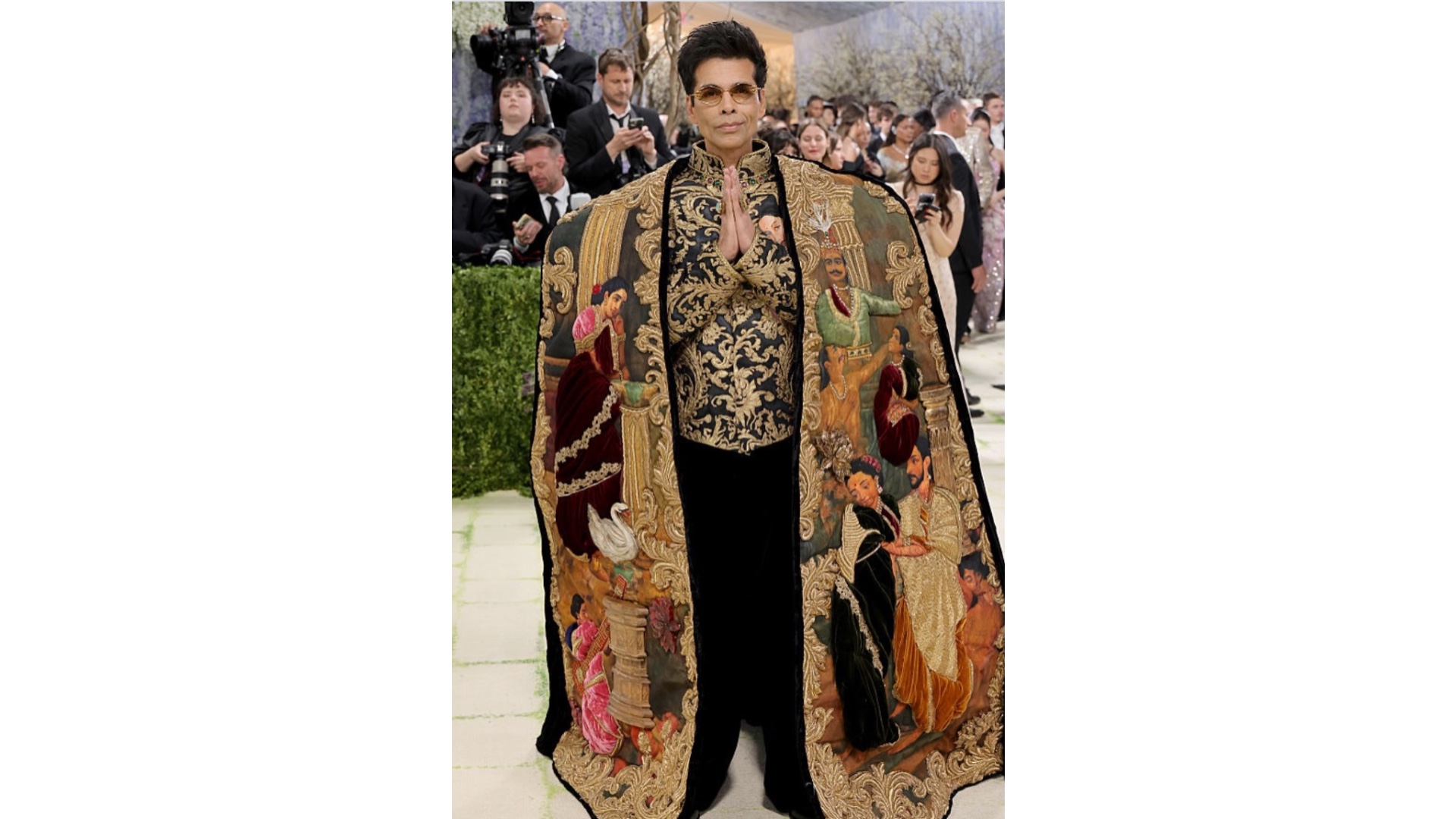
Karan Johar looked radiant in Designer wear by Manish Malhotra titled "Framed in Eternity. He presented a regal look, with a regal sherwani-meets-couture ensemble. Karan Johar's outfit leaned heavily into Indian fine art traditions. The long structured velvet coat in deep jewel tones gave a rich feeling, layered over a sharply tailored base. The hand-painted and embroidered motifs inspired by Raja Ravi Varma's paintings, depicting mythological figures including depictions such as Princess Damayanti with a swan. The embroidery used zardozi, resham and metallic threadwork, giving it a museum-like finish. The silhouette balanced structure with fluidity, almost like a framed artwork in motion. The outfit took over 5,600 hours to be made with 80+ artisans working on this. Beyond the paintings, the cape featured sculptural lotuses, swans, and architectural pillars.
He paired his outfit with statement brooches, layered rings, and polished footwear added to the maximalist aesthetic. He served this look by bringing classical painting into couture form. He remained true to the theme of Fashion Is Art.
Manish Malhotra
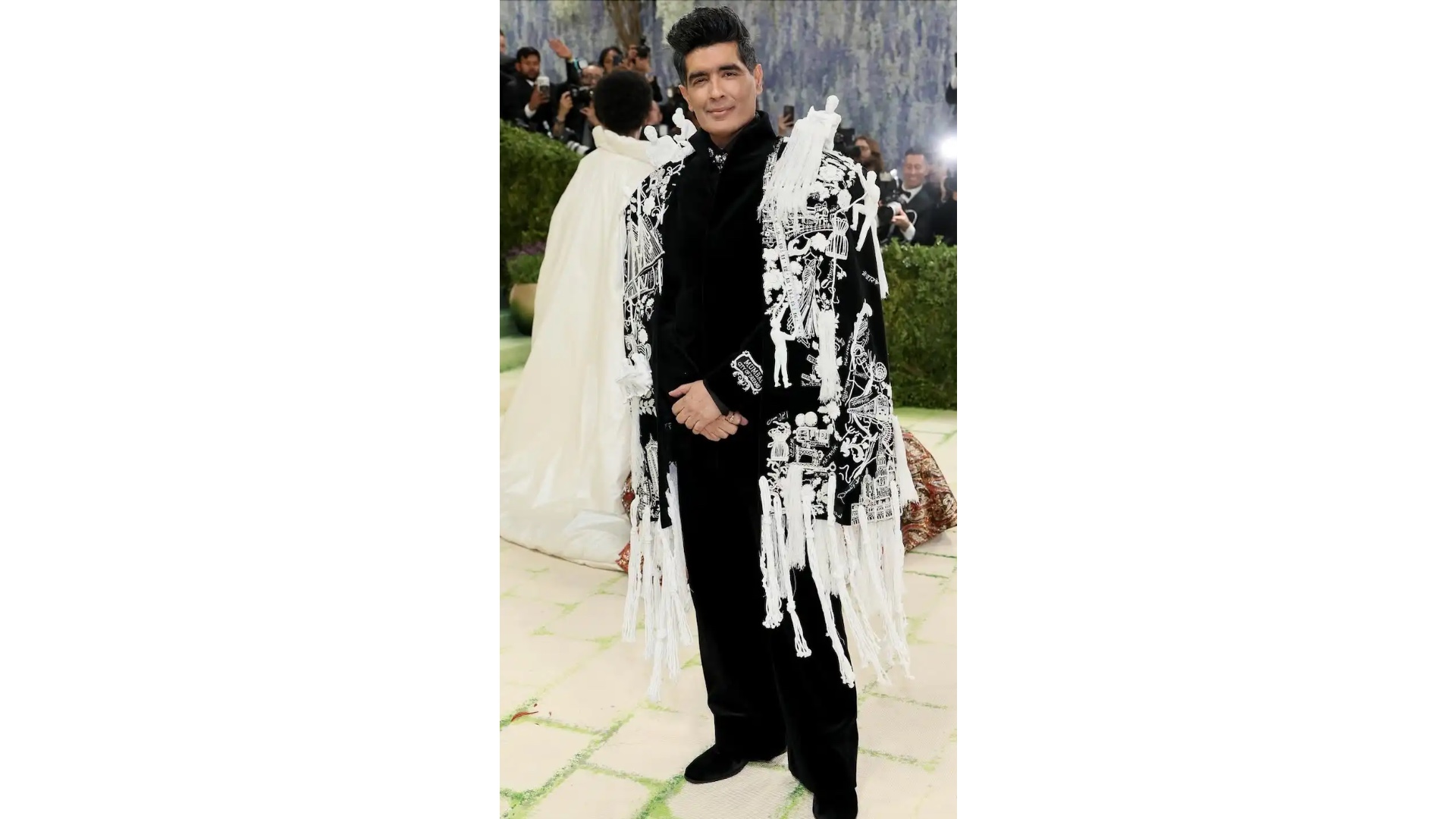
Manish Malhotra one of India’s most celebrated designers showcased himself in a black and white couture ensemble. He placed his atelier directly on the carpet showcasing his work with fine detailing like written Mumbai City Of Dreams on the sleeve end of his cape and the cape embroidered with signatures of the workers. The outfit featured dense zardozi work, chikankari, dori work, little intricate patterns, and layered textures inspired by traditional Indian decorative arts. It resembled his passion for designing , the silhouette was structured yet fluid, combining sharp tailoring with softer drapes that added movement. He presented his own Vision of craftsmanship as art, honoring the artisans that work day and night to create a vision. He also honored India’s own city, Mumbai with its detailing of the Taj Mahal, Gateway of India and many iconic places that all have a history and story. The outfit itself took more than 960 hours to create. He stated that this piece was a tribute to his journey in Mumbai and the hard work of artisans.
Natasha Poonawalla
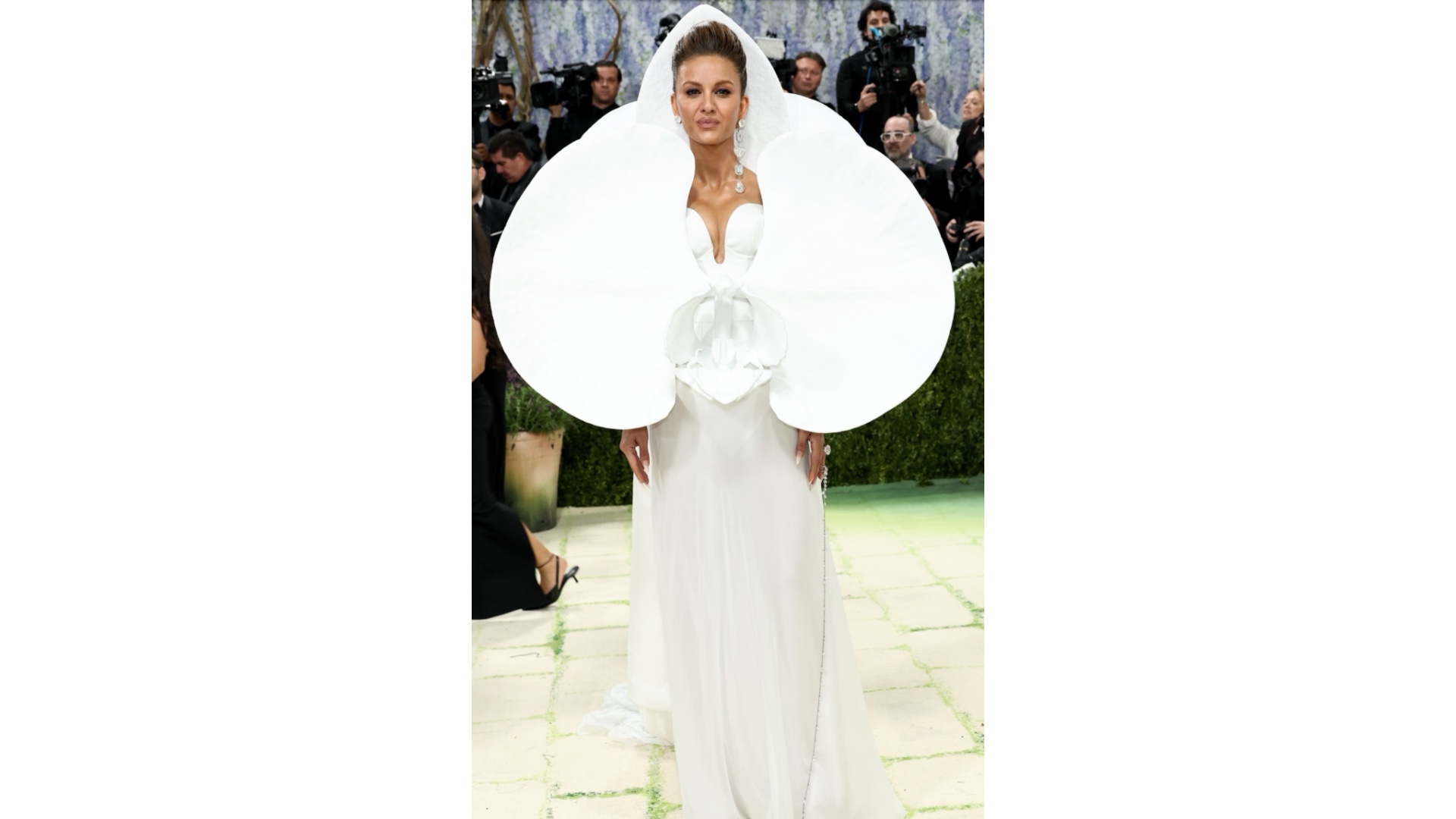
Natasha Poonawalla looked gorgeous in a sculpted orchid by Marc Quinn paired with a Dolce & Gabbana gown. Her long white outfit featured a structured crested gown layered with an elaborated metallic framework that extended outward, creating an architectural silhouette. The base garment was richly detailed with baroque embroidery, intricate beadwork, and luxurious textiles, while the metallic overlay added a futuristic, almost industrial contrast. The look played with duality—soft fabric versus hard structure, tradition versus modernity making it visually striking from every angle. Her styling elevated the drama further, with diamond drop earrings, a single round brilliant on one side, and a cascading chandelier of round, emerald-cut, heart-shaped and pear-cut diamonds on the other, and sharp, sculpted makeup. She delivered one of the most theatrical looks of the night. The base garment was rich in baroque embroidery and luxurious fabrics, while the metallic overlay added a futuristic, almost industrial contrast. The silhouette was bold, exaggerated, and unapologetically artistic.
Princess Gauravi Kumari and Sawai Padmanabh Singh
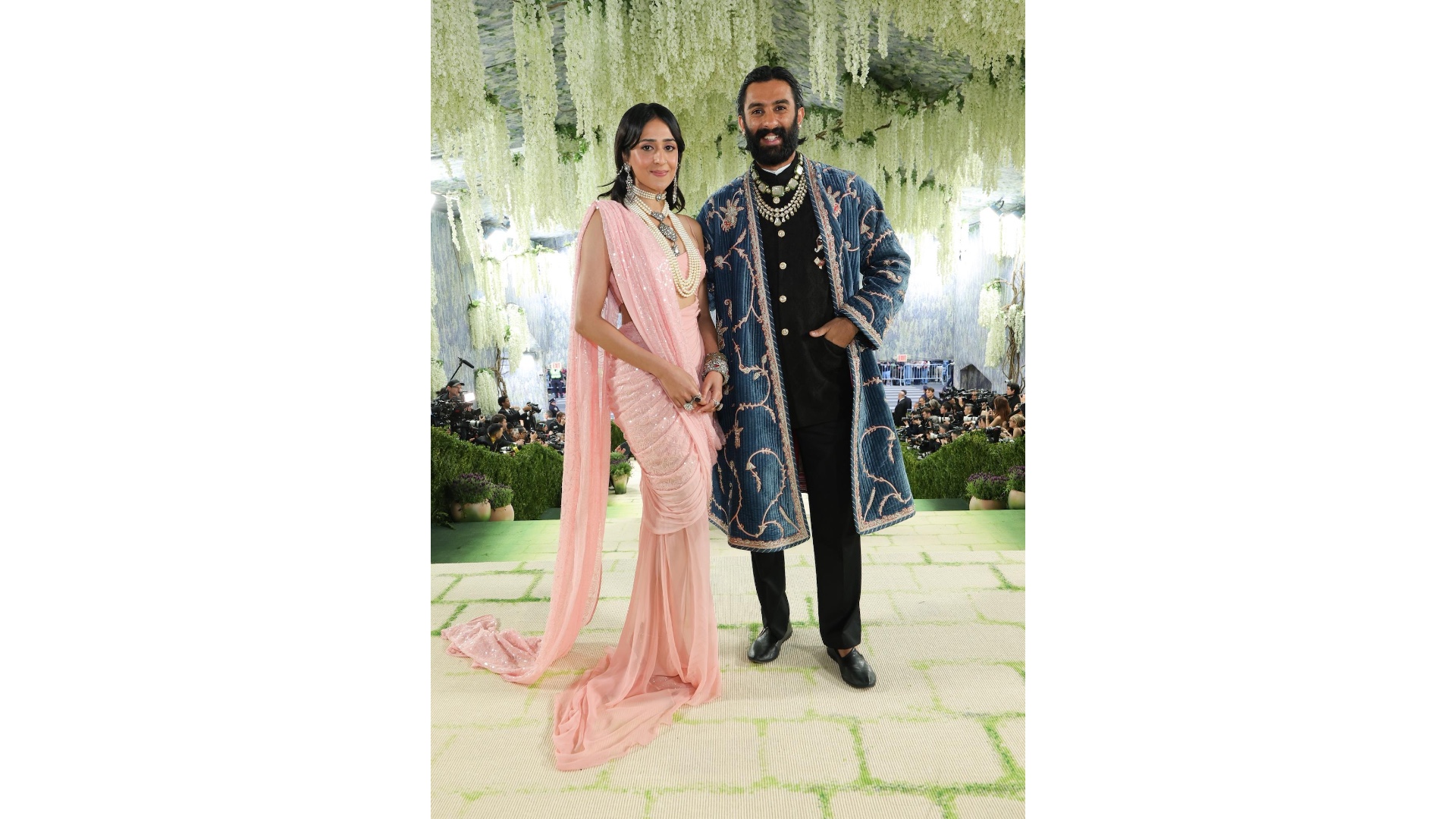
Princess Gauravi Kumari and Sawai Padmanabh Singh brought understated elegance rooted in royal Indian heritage to the Met Gala carpet. Gauravi Kumari wore a delicate vintage chiffon saree in soft pastel tones, inspired by the timeless style of Maharani Gayatri Devi. The saree featured fine embroidery and a fluid drape that highlighted grace over grandeur. She paired the look with heirloom pearl jewellery, adding a layer of authenticity and legacy to her appearance. In contrast yet complementary, Sawai Padmanabh Singh opted for a sharply tailored bandhgala featuring intricate threadwork and subtle embellishments, paired with classic trousers. His look represented Rajasthan’s royal heritage and was elevated with traditional accessories that reflected regal restraint. Together, their presence celebrated heritage as art, proving that history, craftsmanship, and lineage can be just as powerful as avant-garde couture on a global stage. Their looks proved that heritage itself is art, bringing royal Indian history to a global audience.
Ananya Birla
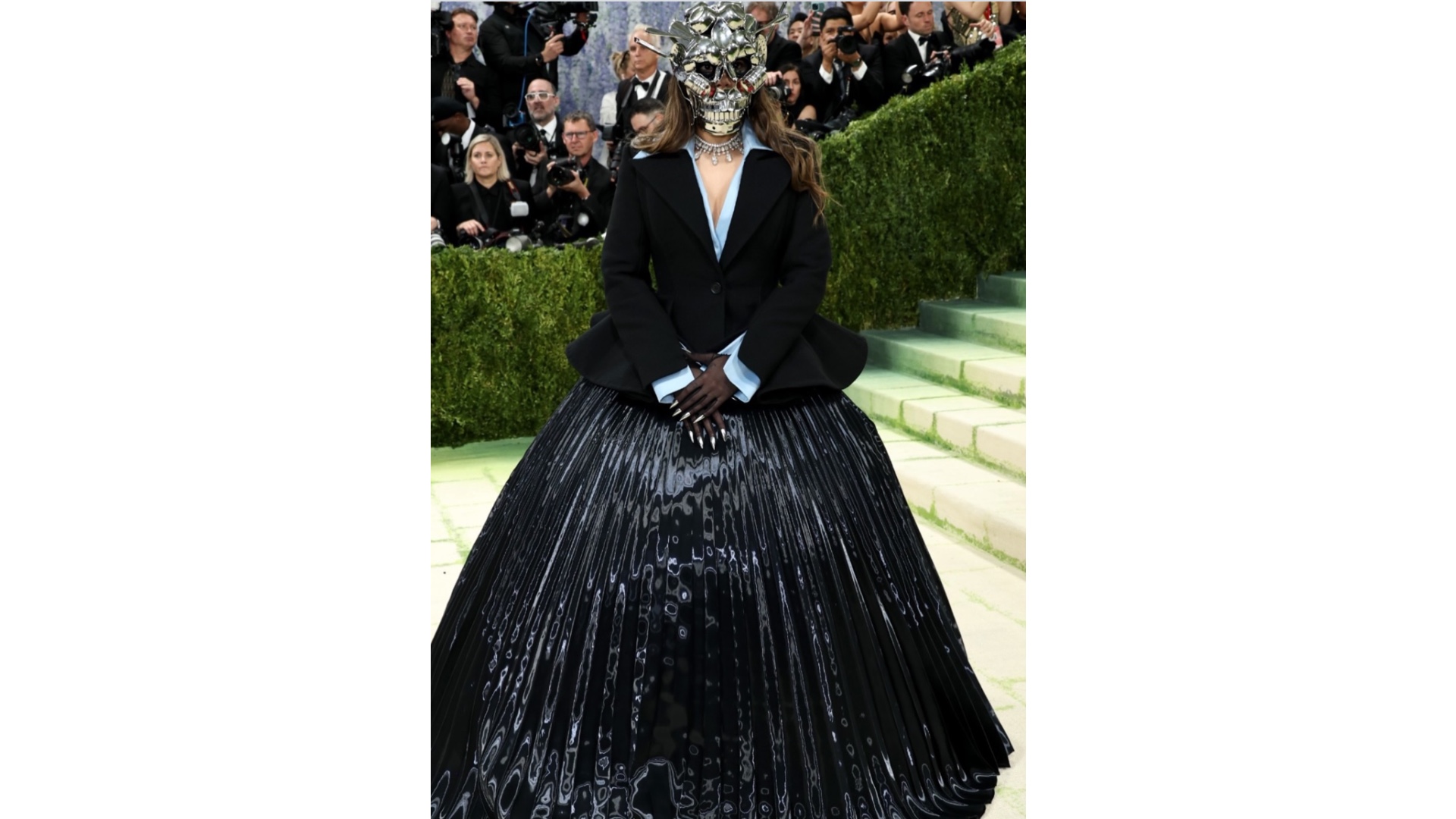
Ananya Birla embraced a bold and futuristic interpretation of the theme with a metallic sculptural ensemble that stood out for its sharp, architectural design. She wore a long pleated skirt crafted in a high-shine fabric, A crisp light blue shirt detail peeking through the collar and cuff. Her outfit featured structured panels and reflective surfaces that created a strong, geometric silhouette, almost resembling a piece of modern art installation. The design focused on clean lines and symmetry, allowing the material itself to become the highlight. The metallic finish interacted with light, creating dimension and movement as she walked the carpet. Keeping the focus on the outfit, she opted for minimal jewellery and sleek styling, with a wavy hairstyle paired with long glazed nails. Her look represented modern art translated into fashion, proving that innovation and structure can be just as expressive as traditional craftsmanship.
Diya Mehta
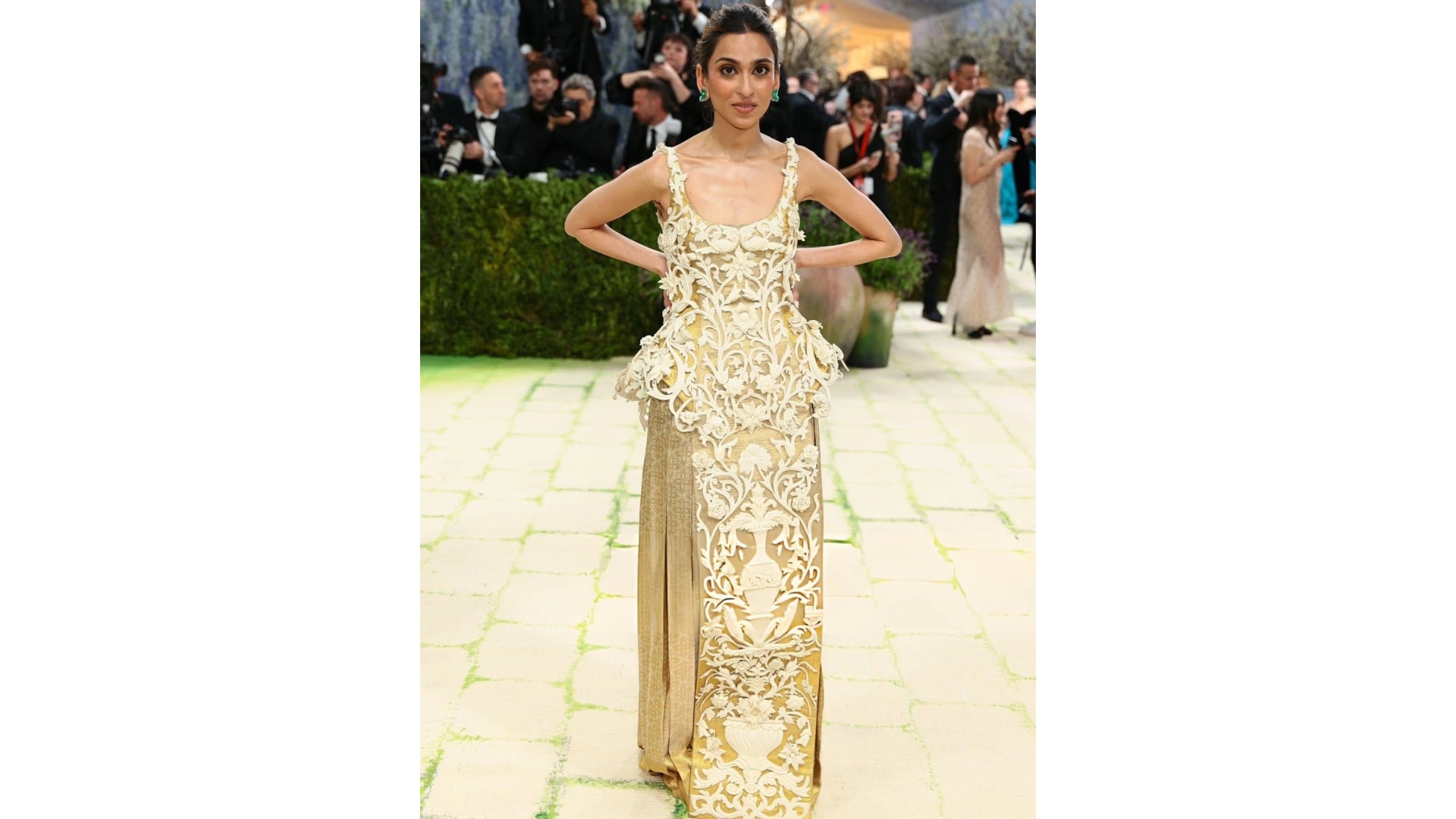
Fashion consultant and entrepreneur Diya Mehta Jatia took a more subtle yet refined approach to the theme, opting for minimalist couture that relied on texture and detail rather than volume. She wore a creation by Mayyur Girotra Her ensemble was built on a rich Kanjivaram silk base woven with gold and silver threads, anchoring the look in South Indian textile heritage Her structured gown featured soft, tonal embroidery and delicate surface work that resembled brushstrokes on canvas. The craftsmanship was evident in the precision of tailoring and the layering of fabrics, which created depth without overwhelming the silhouette. Her jewellery simple emerald earrings, remained delicate and understated, paired with soft glam makeup and effortless styling. Diya’s look proved that art does not always need to be loud, as her interpretation highlighted the beauty of restraint, detail, and quiet sophistication. The design drew parallels with European baroque and French architectural carvings, blending global influences with deeply Indian craftsmanship. She paired the look with bespoke high jewellery by QWEEN, featuring statement gemstones that complemented the richness of the ensemble
Sudha Reddy
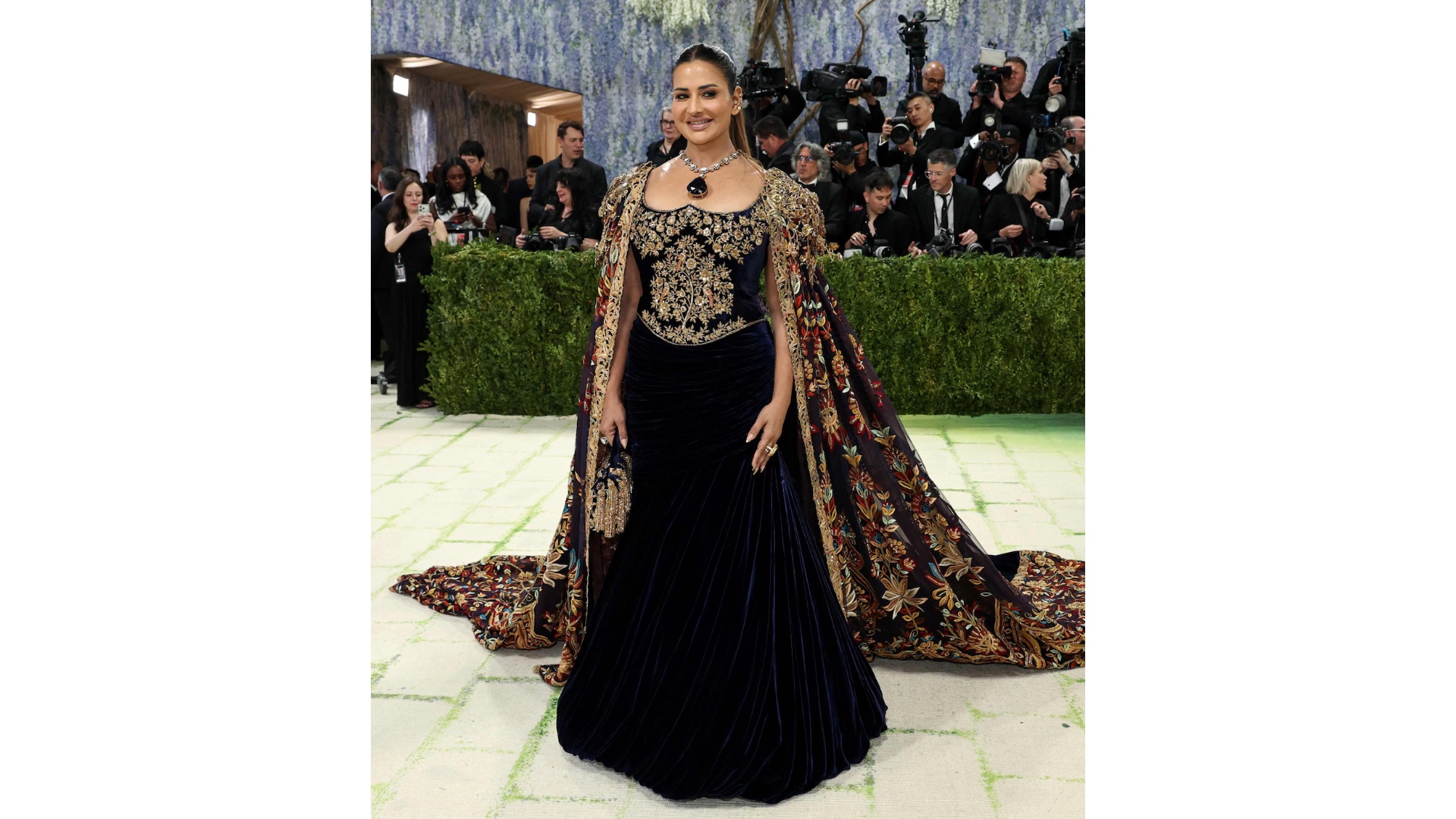
Sudha Reddy, an entrepreneur and philanthropist embraced opulence and grandeur with a black couture gown by Manish Malhotra and stylist Mariel Haenn on an ensemble built around the Tree of Life that celebrated luxury craftsmanship. Her outfit was heavily embellished with crystals, intricate beadwork, and layered textures that shimmered under the lights. The ensemble carried a grand floral aesthetic taking inspiration from the ancient Kalamkari art form. It featured intricate hand embroidery along with celestial elements, gilded peacocks, and temple-inspired iconography woven across the fabric. The outfit took over 3,400 hours to create, involving more than 90 artisans. The silhouette was dramatic yet elegant, designed to command attention while maintaining balance. The detailing reflected traditional artistry, reinterpreted through a contemporary couture lens. She paired the look with a $15 million necklace featuring a 550-carat tanzanite, known as the “Queen of Merelani,” set in a Victorian-style chain adorned with rose-cut diamonds. enhancing the richness of the ensemble, along with classic glamorous makeup and styling.
Mona Patel
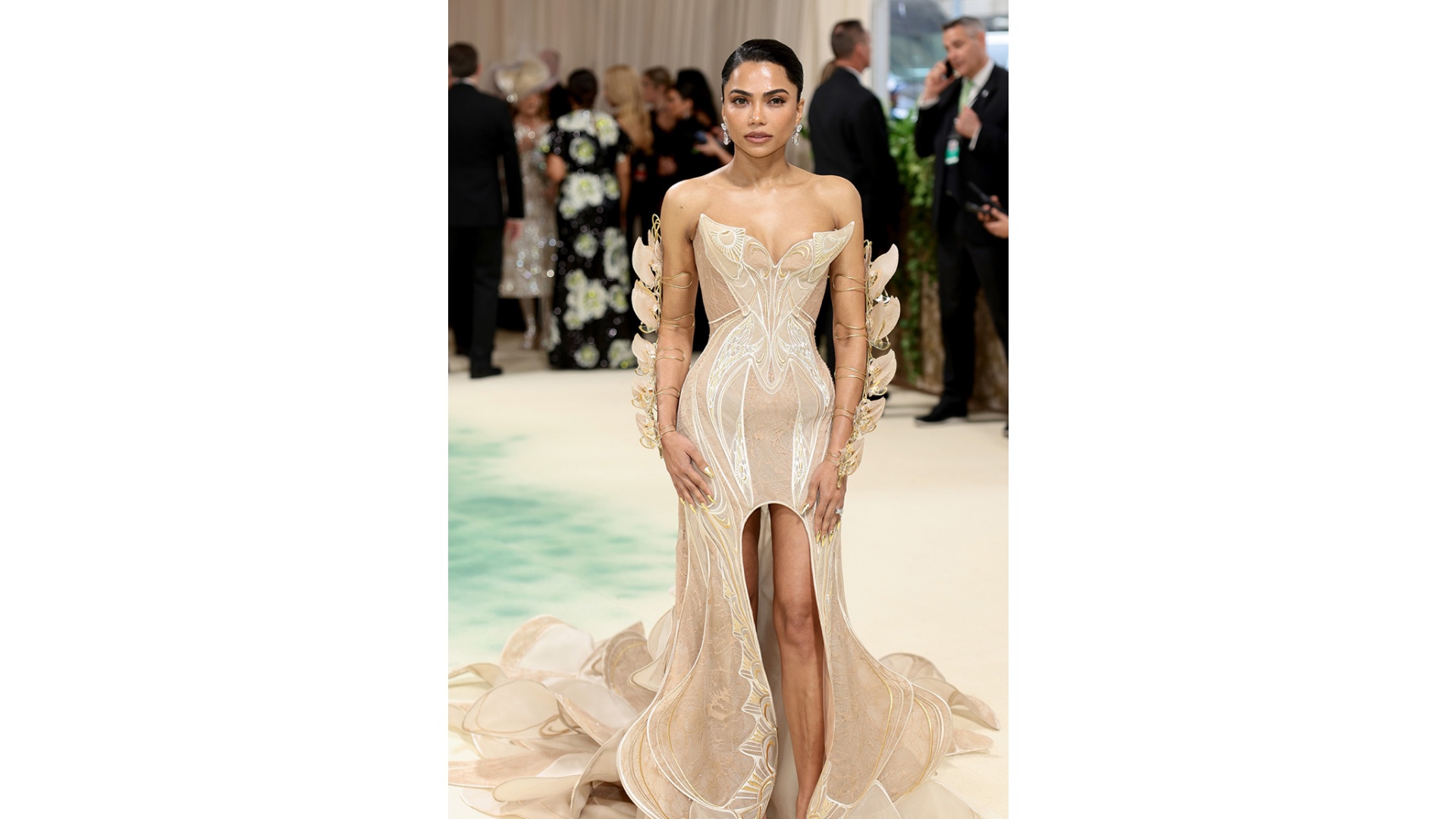
Mona Patel delivered a simple yet strikingly luxurious look stepping into a custom couture ensemble by Dolce and Gabbana inspired by Leonardo Da Vinci. Her look, often described as a tribute to Renaissance art, transformed her into a walking interpretation of the iconic Vitruvian Man.
The gown featured manuscript-style detailing, with prints and textures resembling Da Vinci’s original sketches and codex notes, giving the fabric an aged, parchment-like aesthetic. The design incorporated anatomical references and structured paneling, subtly echoing the proportions and geometry of the human body—central to Da Vinci’s work.
The silhouette itself was carefully constructed to feel both sculptural and fluid, blending Renaissance inspiration with modern couture techniques. Fine detailing across the garment created the illusion of hand-drawn lines and artistic etchings, turning the outfit into a literal canvas of historical art.
She kept her styling sleek and refined, allowing the outfit’s conceptual depth to take centre stage. Minimal jewellery complemented the look, ensuring that the craftsmanship and storytelling remained the focus.
Mona Patel’s ensemble stood out because it went beyond visual appeal—it became a dialogue between fashion and fine art, bringing a 500-year-old artistic legacy into a contemporary red-carpet moment.
Bhavitha Mandava
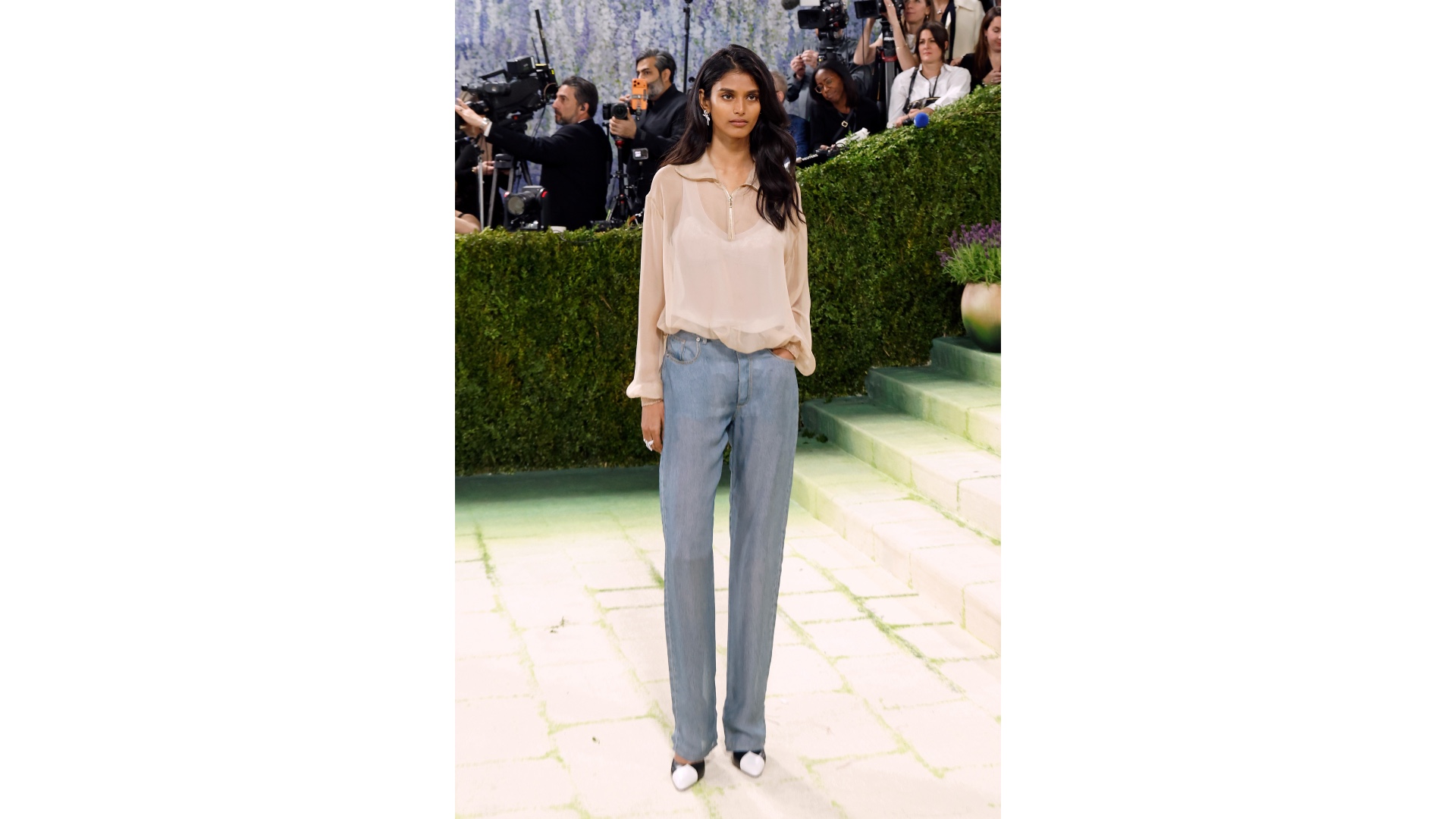
Bhavitha Mandava ambassador of Chanel, was one of the most talked about after the Met Gala, as many found her outfit to be very simple. Her brand Chanel was criticized for choosing to send her in an outfit appeared in what looked like a simple denim and sheer fabric transparent top. However sources say the outfit was actually a trompe l’oeil couture creation, crafted entirely from ultra-fine silk and luxury materials designed to mimic the appearance of denim and casual knitwear.
The silhouette was clean and minimal, featuring straight-leg “denim” trousers paired with a structured top, creating a relaxed yet sharply tailored appearance. Her styling remained understated, with minimal accessories and natural makeup, reinforcing the intentional simplicity of the look. Even her footwear classic cap-toe pumps black and white were aligned with Chanel’s refined aesthetic.
What made Bhavitha Mandava’s appearance stand out was its subtle rebellion. In a room filled with dramatic gowns and sculptural silhouettes, she chose restraint, proving that fashion as art can also exist in illusion, concept, and quiet disruption. While the look sparked mixed reactions, it undeniably became one of the most discussed moments of the night.
Closing Note
What made Indian celebrities stand out at the Met Gala 2026 wasn’t just their fashion choices—it was their ability to tell stories through craftsmanship, heritage, and innovation. From hand embroidery and royal textiles to sculptural couture and futuristic materials, each look proved that Indian fashion is not just relevant globally—it is leading the conversation on fashion as art.